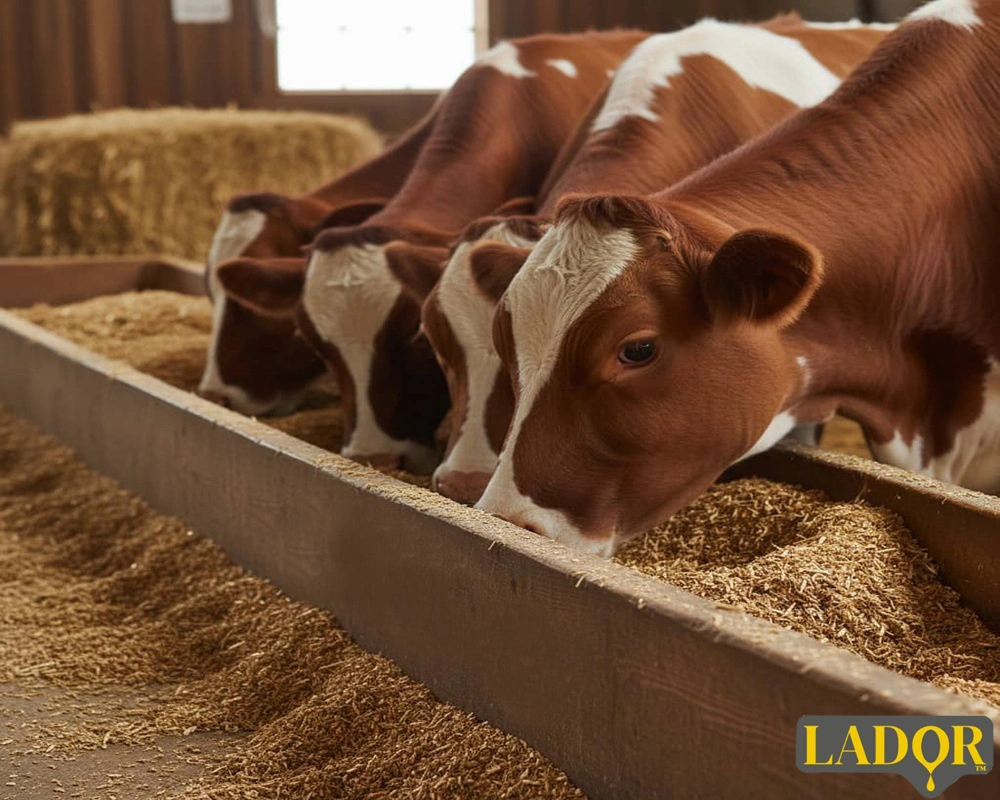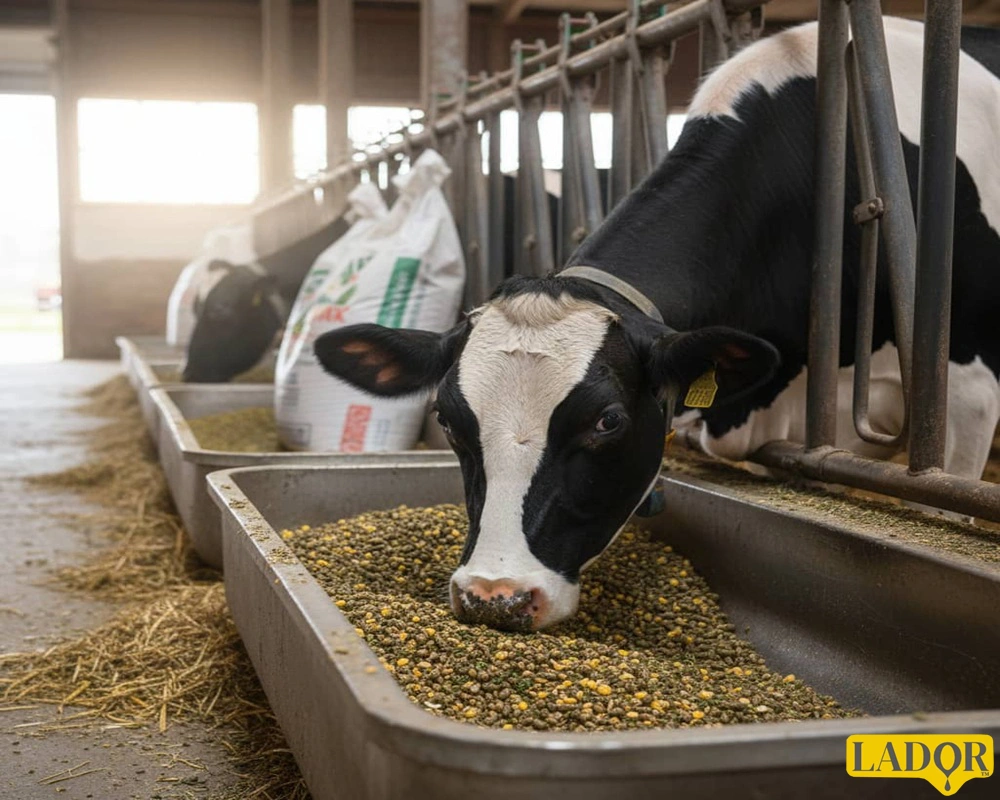
Livestock rice bran is one of the most important by-products of the rice milling industry, obtained after the separation of the outer hull and before reaching the white rice grain. This material is not only a source of energy and fiber but, due to its reasonable price and high availability in rice-growing regions, it has become a prevalent and strategic component in the formulation of dietary rations for various types of livestock, poultry, and aquaculture species. The proper use of rice bran can both reduce the final cost of feed and supply a portion of the animals’ nutritional requirements.
The composition of rice bran varies slightly depending on the rice variety and the quality of processing, but generally has the following characteristics:
Important Note: Rice bran contains a large amount of Phosphorus, but a significant portion of this phosphorus (about 70 to 80%) is in the form of Phytate, which is poorly absorbed in the digestive tract of monogastric animals (such as poultry and swine), unless supplemented with the enzyme Phytase.
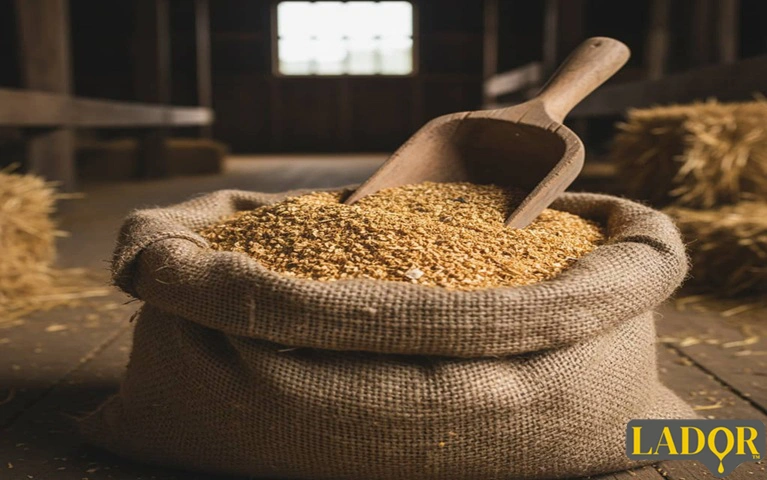
Rice bran must be processed immediately after production. The main reason for this is its high-fat content and the presence of the enzyme Lipase, which rapidly breaks down the fat, leading to rancidity and spoilage (oxidation) of the bran.
Fresh bran is rapidly heated using moist heat (such as steaming) or the extrusion process. The goal is to inactivate the Lipase enzyme to prevent rancidity and increase shelf life. This type of bran has a higher quality and energy content.
The oil is extracted from the rice bran using chemical solvents or a pressing process. The goal is to increase stability and raise the percentage of the remaining protein and fiber. Consequently, this type of bran is poorer in energy.
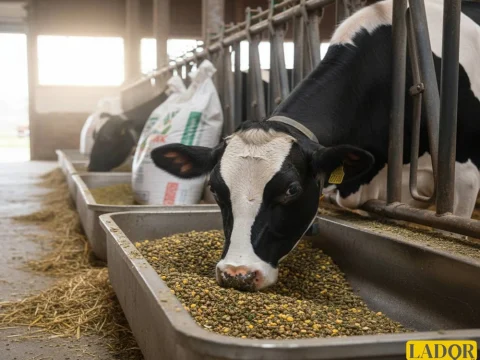
After stabilization or defatting, the bran is mixed with other dietary components (such as corn, soybean, oilseed meals, and supplements) as an ingredient, and is finally consumed by the animals in pellet or mash form.
Rice bran must be processed immediately after production. The main reason for this is its high-fat content and the presence of the enzyme Lipase, which rapidly breaks down the fat, leading to rancidity and spoilage (oxidation) of the bran.
Fresh bran is rapidly heated using moist heat (such as steaming) or the extrusion process. The goal is to inactivate the Lipase enzyme to prevent rancidity and increase shelf life. This type of bran has a higher quality and energy content.
The oil is extracted from the rice bran using chemical solvents or a pressing process. The goal is to increase stability and raise the percentage of the remaining protein and fiber. Consequently, this type of bran is poorer in energy.
After stabilization or defatting, the bran is mixed with other dietary components (such as corn, soybean, oilseed meals, and supplements) as an ingredient, and is finally consumed by the animals in pellet or mash form.
Permissible Levels and Consumption Limitations
Important Note: Due to high fiber content and poor absorption of phytate phosphorus, the use of rice bran must be adjusted cautiously based on the animal species.
Permissible Level in Ration: Maximum 15 to 20%.
Reason for Limitation: Higher consumption can lead to reduced feed intake and problems with nutrient absorption.
Permissible Level in Ration: Up to 25%.
Reason: Due to the high-energy requirement during the finishing period.
Permissible Level in Ration: 10 to 15%.
Reason: To maintain fiber and energy balance.
Permissible Level in Ration: Maximum 5%.
Reason for Limitation: High fiber reduces energy absorption and impairs performance.
Permissible Level in Ration: Maximum 10%.
Reason: Laying hens tolerate fiber better.

Ala oil Sepahan Company, operating under the brand name Lador and managed by Mr. Saeid Alaee, is an experienced producer. The company’s products include feed wheat, feed corn, feed soybean, feed alfalfa, and countless other products.
Rice bran, as a valuable by-product, has high potential for reducing costs and improving the quality of livestock rations. However, successful utilization depends on proper stabilization and storage, accurate ration formulation by a nutrition specialist to manage fiber and phytate levels, and attention to the animal type. By observing these points, rice bran can be an excellent and sustainable feed source for the livestock industry. For price inquiries and more information, please contact our consultants at Ladorfat.