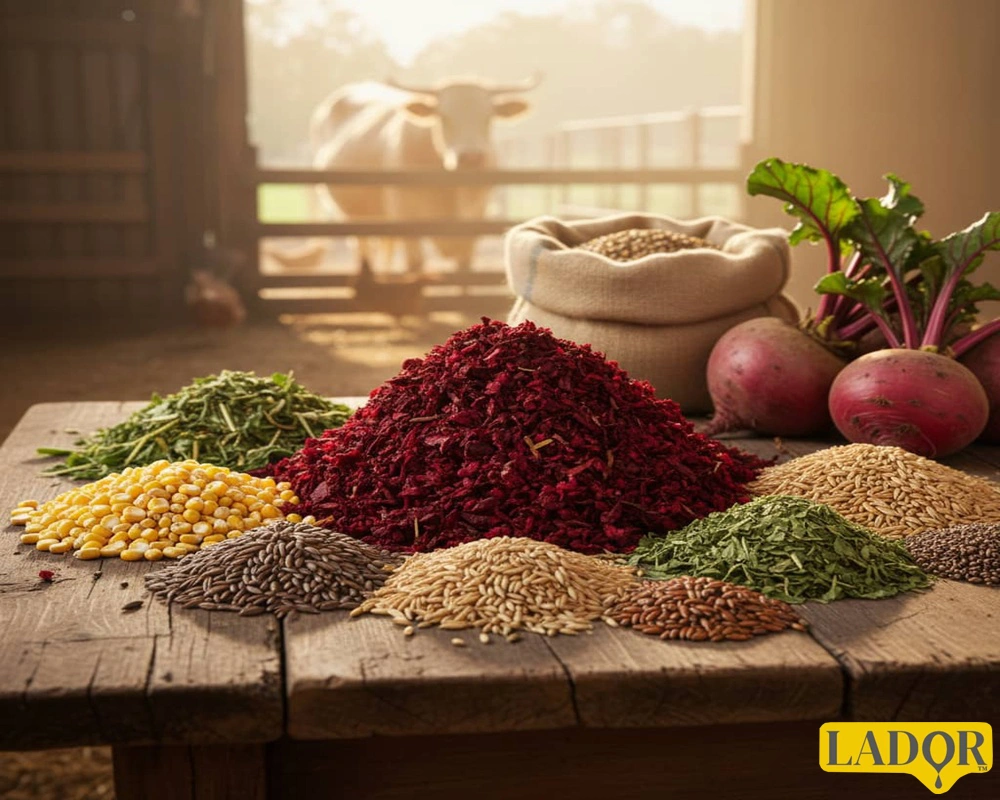
Beet pulp is a side product of sugar factories, remaining after the extraction of sugar (sucrose) from the beet root. Given the high price of grains and the limitation of water resources, utilizing agricultural waste and by-products has become a necessity in ration formulation. Due to its high fiber content and favorable digestibility, this product is used as an alternative energy source to replace a portion of barley and corn in livestock and poultry rations.
Applications in Livestock and Poultry Feed
Beet pulp has numerous applications in livestock and poultry farms:
In Livestock Feed (Ruminants)
- Dairy Cows: Increases milk fat percentage due to improved ruminal fermentation.
- Beef Calves: Replaces part of the grains to prevent acidosis.
- Sheep and Goats: An excellent energy source for pregnant ewes and growing lambs.
In Poultry Feed
Its use in poultry is more limited due to their monogastric digestive system. However:
- In laying hen rations (in small amounts), it is used to control the rate of passage and improve gut health.
- In ostrich rations, it has broader applications due to their ability to digest fiber.
Advantages and Positive Effects of Beet Pulp
- Digestive Health: Due to its pectic fiber, it reduces the risk of acidosis (rumen acidification) unlike grains.
- Palatability: Livestock have a high tendency to consume it, especially if mixed with molasses.
- Economic Productivity: Reduces the final cost of the ration by replacing a portion of expensive inputs.
- Water Absorption: Dry pulp has a high water absorption capacity, which creates a feeling of satiety in the animal.
Main Differences Between Wet (Fresh) and Dry Beet Pulp
The differences between wet (fresh) and dry sugar beet pulp in terms of application and ration management are as follows:
1. Moisture Content and Dry Matter
- Wet Pulp: Approximately 75% to 85% of it consists of water. This means in every 100 kg of wet pulp, there are only 15 to 25 kg of nutrients.
- Dry Pulp: Its moisture is very low (about 10%), and the concentration of nutrients is much higher.
2. Shelf Life and Storage
- Wet Pulp: Due to high moisture, it spoils and molds very quickly (within a few days). For long-term storage, it must be ensiled.
- Dry Pulp: Has a very high shelf life and can easily be stored in bags or dry warehouses for months.
3. Transportation and Cost
- Wet Pulp: Due to the heavy weight of water, it has high transportation costs and is usually only economically viable for farms near sugar factories.
- Dry Pulp: Due to its light weight and low volume, it has lower transportation costs and is easier to move.
4. Consumption Method and Palatability
- Wet Pulp: Is more palatable and helps with lower water consumption by the livestock due to its moisture. In Total Mixed Rations (TMR), it also helps with the cohesion of ingredients and prevents selective eating by the animal.
- Dry Pulp: Usually needs to be soaked in water before consumption (especially for horses and sheep) to prevent esophageal obstruction or digestive problems caused by sudden swelling in the stomach.
5. Differences in Feeding Method and Palatability
- Wet Pulp: Highly palatable. Due to being moist, it mixes easily with other feed components (such as concentrates and straw) and prevents the ration from becoming “dusty.”
- Dry Pulp: Usually comes in the form of flakes or pellets. It is better to soak it before consumption; if eaten dry, it swells in the animal’s stomach and may cause bloating or digestive issues.
6. Price Difference
- Wet Pulp: The price per kilogram seems very cheap, but considering the weight of the water, the final cost of its nutrients may compete with the dry type.
- Dry Pulp: The nominal price per kilogram is higher, but you are only paying for the nutrients, not the water.
Safety Tips for Storage
Dry Pulp: Must be kept in a completely dry place on pallets. Moisture causes rapid molding and the production of fungal toxins (aflatoxins), which are dangerous for animal health and milk quality.
Wet Pulp: If using moist pulp, it should not stay in the open air for more than 2 to 3 days. For long-term storage, it must be ensiled like corn and covered with plastic to prevent air exposure.
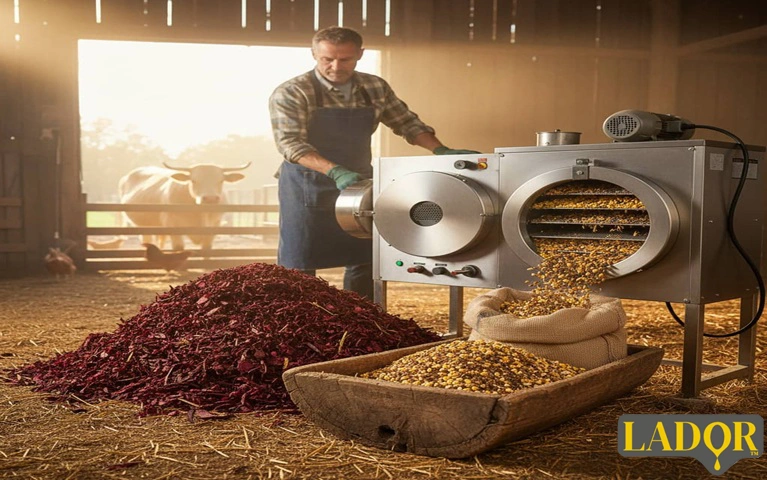
Chemical Composition and Nutritional Value
- Carbohydrates: Rich in cellulose, hemicellulose, and pectin (highly digestible fibers).
- Protein: Moderate protein level (about 8% to 10%).
- Energy: Its energy level is almost equal to barley, but unlike grains, it has low starch.
- Minerals: Has high calcium and low phosphorus (requires balance in the ration).
Preparation and Processing Methods
After sugar extraction, moist pulp is obtained and prepared for animal feed in three main ways:
Moist (Wet) Pulp
Transported to farms immediately after production with about 80% moisture. It has a short shelf life and must be consumed quickly.
Ensiled Pulp
Wet pulp is ensiled to increase shelf life and improve flavor (sometimes with the addition of molasses or lactic acid bacteria).
Dry Pulp
The pulp is dried in industrial dryers and is usually offered in two forms:
Flake
Irregular and flat pieces.
Pressed (Pellet)
Small cylindrical shapes that are easier to transport and store.
Preparation and Soaking Instructions for Beet Pulp
Many livestock farmers pour the pulp dry into the mangers, but the principled method is as follows:
- Water Ratio: For dry pellet pulp, add about 2 to 3 liters of water for every kilogram of pulp.
- Waiting Time: Allow it to sit for about 3 to 5 hours until it is fully expanded. Dry pulp can absorb water up to 5 times its own volume in the animal’s stomach; therefore, soaking it before consumption prevents bloating and esophageal obstruction (especially in horses and sheep).
- Mixing with Molasses: If your pulp is the non-molasses type, you can add a little liquid molasses to the water during soaking to multiply its energy and palatability.
Effects of Beet Pulp on Rumen Health
Unlike corn and barley, which contain starch and rapidly convert to lactic acid in the rumen, sugar beet pulp contains pectin. Pectin ferments slowly. This means the rumen pH does not drop suddenly, and the environment remains ideal for the activity of beneficial fiber-digesting bacteria. Simply put, sugar beet pulp acts like a “buffer” or a natural shock absorber.
Standard Consumption Ratios of Beet Pulp in Rations
In livestock farms, it is used for various animals in the following ratios:
1. Dairy Cows
In lactating cows, sugar beet pulp is an excellent supplement for forages like corn silage. You can replace 10% to 20% of the concentrate portion of the ration with sugar beet pulp. This encourages more chewing and increases saliva secretion, the direct result of which is seen in increased milk fat. The maximum daily consumption for a high-producing cow is about 3 to 5 kg (dry weight).
2. Beef Calves
For beef calves that are gaining weight, our goal is muscle growth. Sugar beet pulp can comprise up to 25% of the ration. Because this substance does not cause acidosis, you can use it alongside grains with more peace of mind. This combination makes the calf’s body “fleshy” and improves meat quality.
3. Sheep and Lambs
Sheep are extremely fond of sugar beet pulp. For ewes, a consumption of about 200 to 500 grams per day is recommended. For fattening lambs, up to 15% of the ration can be allocated to pulp.
Critical Note: In male lambs, due to the high calcium content of the pulp, supplements containing phosphorus or ammonium chloride must be used to prevent the formation of kidney stones.
Important Tips and Restrictions on Beet Pulp Consumption
- Vitamin Deficiency: beet pulp lacks Vitamins A and D; therefore, these must be accounted for in the ration supplements.
- Calcium to Phosphorus Ratio: Due to the high calcium content, the phosphorus balance in the ration must be carefully monitored to prevent skeletal and bone issues.
- Soaking: It is recommended to soak dry pellet pulp slightly before feeding to sensitive animals (such as horses or sheep) to reduce the risk of esophageal obstruction.
Ala oil Sepahan Factory
Ala oil Sepahan Factory, operating under the Lador brand, is a pioneer in the production of powders, oils, and raw materials for livestock and poultry feed. As a specialized hub in the feed industry, Ladorfat operates beyond a mere production unit, serving as a strategic supplier and enricher of the livestock and poultry feed value chain.
Ladorfat presence in this market ranges from the direct processing of certain products to the supply of key raw materials and additives for products such as livestock and poultry pistachio skin granules, olive meal, and date pits. By providing technical expertise and base materials, the company plays a pivotal role in optimizing and supplying products such as hydrogenated poultry oil, bulk poultry oil, pure crude soybean oil, and final formulations like poultry meat meal and barley malt pulp, ultimately enhancing quality and reducing ration costs.
Conclusion
beet pulp is considered a “semi-concentrate” feed ingredient that acts as a bridge between forage and grains. This material not only reduces nutritional costs but also ensures animal health and production by improving the rumen environment and preventing digestive diseases. Its intelligent use (up to 20% of the ration in dairy cows) significantly increases the economic efficiency of the farm. To inquire about prices and for more information, please contact Ladorfat consultants.