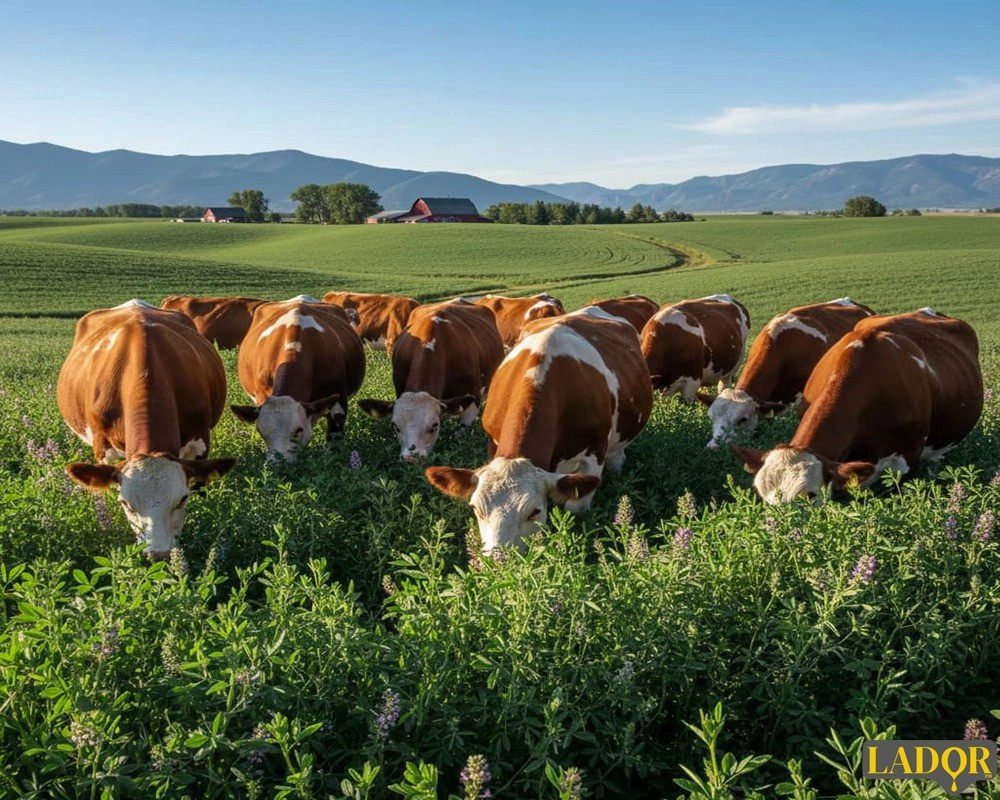

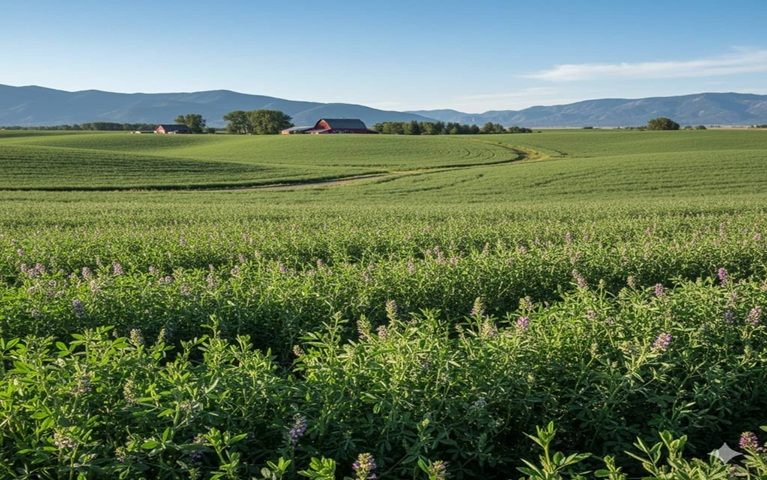
Hay for livestock is one of the oldest and most valuable cultivated forages in the world. Thanks to its high nutritional value, good digestibility, and high yield in livestock feeding, it is known as the “queen of forages.” This perennial plant—with its deep root system, long lifespan, and high productivity—is a staple in the diets of beef and dairy cattle, sheep, goats, and even horses. The importance of alfalfa in the livestock industry is so great that its quality and quantity can directly affect meat and milk production, animal health, feed costs, and overall farm profitability.
The following steps are taken to plant alfalfa:
Deep plowing to break up the soil
Leveling and softening the soil for better germination
Weed control before planting
Best planting times in different regions of Iran:
Spring (after the risk of frost has passed)
Late summer to early autumn in moderate climates
Seed rate: 20–25 kg per hectare
Use healthy, pure, disease-free seed
Alfalfa is a water-demanding crop, especially in the first year.
Irrigation immediately after planting
Regular irrigation every 7–10 days in summer
Phosphate fertilizers at planting
Limited nitrogen application in the first year
Well-rotted manure to improve soil fertility
The consumption of livestock hay is different for each animal:
Dry alfalfa intake: 2–5 kg per day
In industrial dairies: used partly in TMR rations
Offered freely as a fiber source
Combined with concentrates for weight gain
Dry or semi-dry alfalfa (especially during lambing and lactation)
More digestible than straw and coarse forages
An ideal feed, but must be introduced gradually
Used as alfalfa powder or meal
A source of vitamins and natural pigments
Alfalfa alone is not a complete feed and is usually mixed with other ingredients. Common combinations include:
Increases milk volume and fat content
Improves udder health and reduces mastitis
Reduces digestive problems
Improves feed conversion ratio
Enhances muscle growth
Helps balance high-concentrate rations
Increases milk production
Improves lamb and kid health
Suitable for the post-partum period
Provides energy without causing digestive stress
Suitable for sport horses in controlled amounts

Ala oil Sepahan, operating under the brand name Lador, is one of the active companies in the production and supply of livestock and poultry feed. The company provides various products including forage, concentrates, supplements, and other feed materials needed by farmers. With the goal of improving efficiency in livestock units, Lador focuses on producing high-quality, reliable, and sustainable feed. Alfalfa is one of the main components used in rations recommended or processed by this company.
Companies producing raw materials and additives for livestock and poultry produce bulk feed and bulk oil in various packaging, some of which include animal wheat bran, animal wheat, animal soybeans, fodder corn, pure and palm fat powder, fatty acids, sunflower oil, etc.
Hay for livestock is one of the best forages for livestock due to its high nutritional value, good digestibility, high protein content, and positive effects on animal health and productivity. Proper cultivation, timely harvesting, and correct storage play key roles in maintaining its quality and improving feed efficiency in livestock farms. With the right combination in the ration, alfalfa can increase milk production, improve beef growth performance, reduce diseases, and boost profitability. For price inquiries and consultation, you can contact Ladorfat expert team.