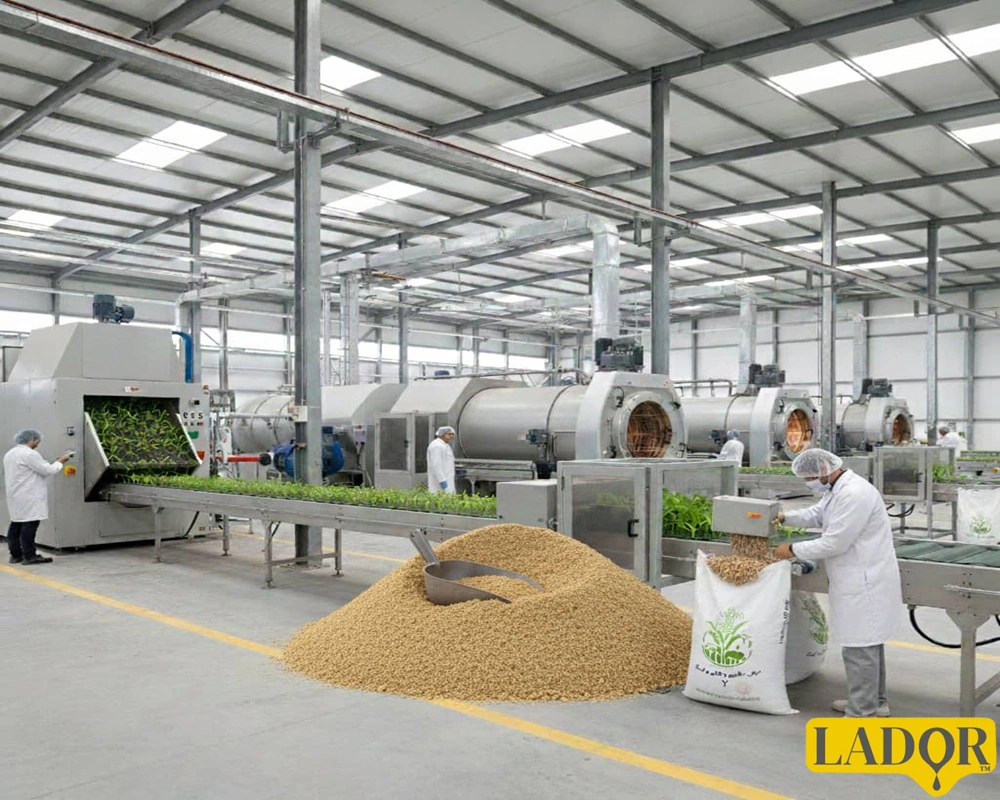

Barley flakes for livestock are not just a simple feed, but a “cooking technology” that releases the latent potential within the barley grain. Although the price per kilogram of barley flakes is higher than regular barley, it significantly increases the profitability of the livestock unit in the long run by reducing waste, increasing growth rates, and improving animal health. Using this product is a step toward industrial and scientific animal husbandry.
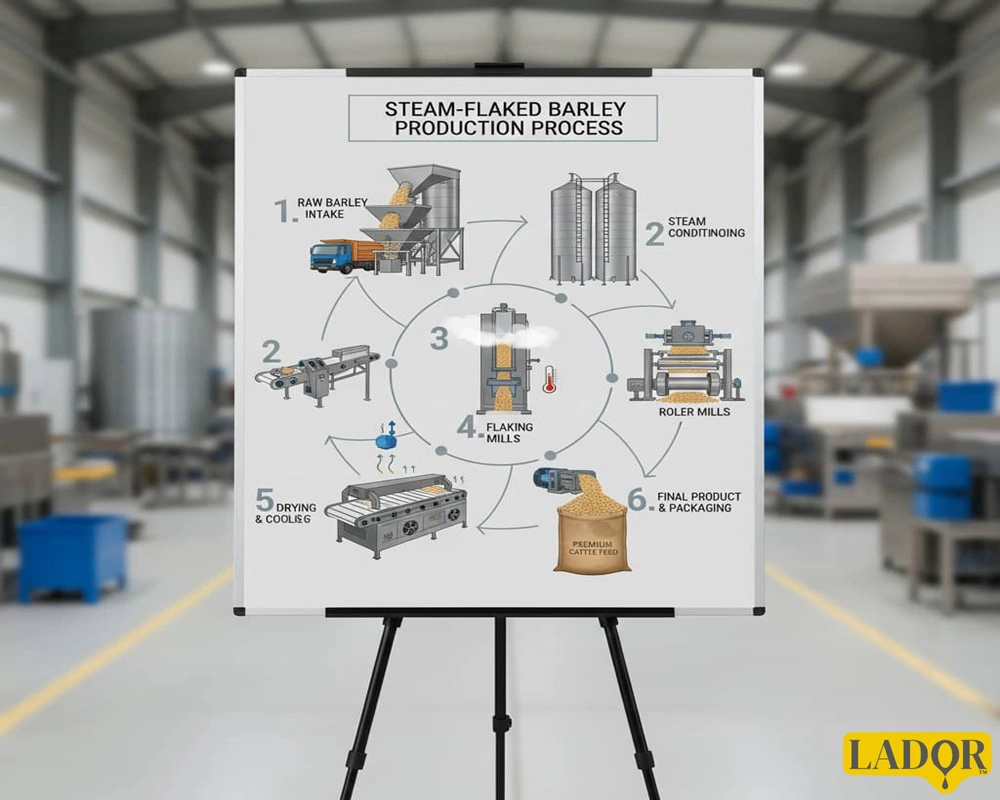
In traditional methods, grains are fed to livestock in raw or ground form. However, the animal’s digestive system (especially in ruminants) cannot digest all the starch present in raw barley grains. Barley flakes are a product that undergoes a thermal and mechanical process (steaming followed by pressing under heavy rollers) to change its structure into thin sheets. This process leads to the “gelatinization” of starch, drastically increasing its absorption capacity. By doing this, oat flakes is obtained.
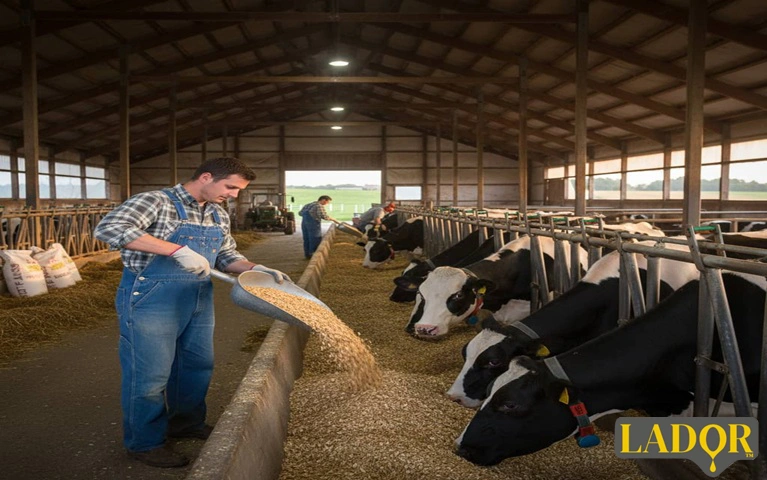
Calf and Lamb Fattening: To achieve maximum weight gain in the shortest possible time.
High-Yielding Dairy Cows: To compensate for energy deficits in the early lactation period.
Starter Feed: Due to its easy digestibility, it is the best option for newborn calves to gradually acclimate their stomachs to grains.
Incorporating this product into the diet offers significant economic and health benefits:
Livestock gain more weight while consuming less feed.
In dairy cows, it increases milk yield and optimizes the percentage of milk fat and protein.
Raw barley may pass through the animal’s body without being digested, but oat flakes are nearly 100% digestible.
The crispy texture and pleasant aroma from steaming increase the animal’s appetite and feed intake.
Because the starch is cooked, the risk of acidosis (rumen souring) is lower than with ground barley, provided the diet is managed correctly.
Many livestock farmers mistake barley flakes for crushed/ground barley, while there are fundamental differences:
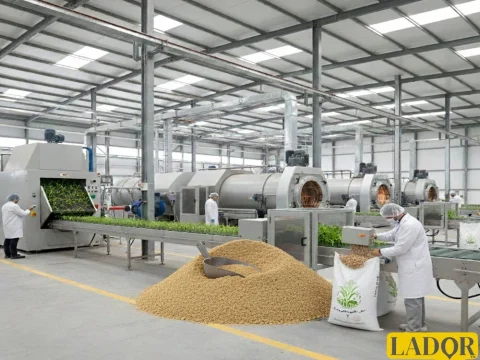
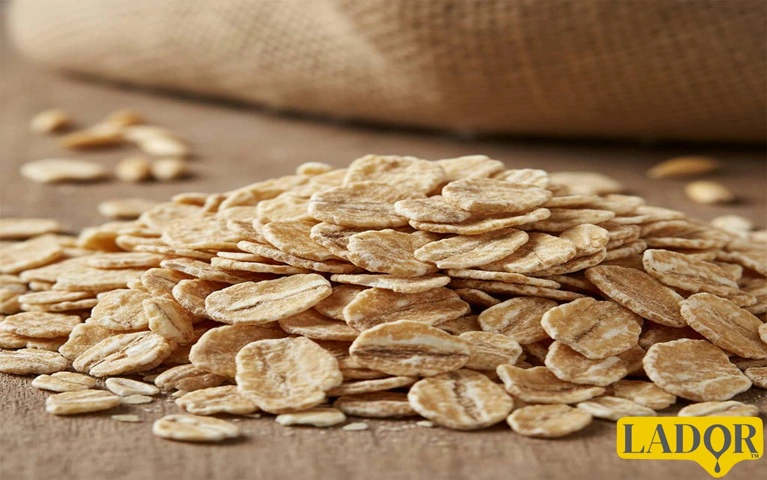
Barley Flakes: Uses a complex process involving wet steaming at high temperatures followed by passing through heavy rollers. In fact, the grain is parboiled and then pressed.
Mechanized Barley: This is purely a cold mechanical process where the grain is broken into smaller pieces by blades or a millstone.
Barley Flakes: Causes starch gelatinization. This means the hard chemical bonds of the grain are broken, making the starch fully accessible to rumen bacteria for rapid absorption.
Mechanized Barley: The starch structure remains intact in this method. The grain is only reduced in size, but the starch molecules remain hard, and a large portion is excreted without being absorbed.
Barley Flakes: Due to being moistened and cooked, there is no dust. This feature prevents allergies and respiratory diseases in livestock (especially in enclosed environments).
Mechanized Barley: The grinding process produces a large amount of dust and fines, which can irritate the animal’s lungs and contaminate the storage environment.
Barley Flakes: It has a very high digestion rate and provides more net energy to the livestock. This directly impacts the speed of weight gain.
Mechanized Barley: Its digestion speed is moderate, and because no cooking process has been performed on it, it produces less energy relative to the weight consumed.
Barley Flakes: Due to the need for steam boilers, advanced rollers, and energy consumption in the production line, it has a higher finished price; however, it compensates for this cost through higher productivity (better conversion ratio).
Mechanized Barley: It requires simpler equipment and is cheaper to produce, but waste and grain excretion are higher in this method.
Aala oil Sepahan Factory, under the Lador brand name, is a pioneer in the production of powders, oils, and raw materials for poultry and livestock feed. As a specialized hub in the feed input industry, the Ladorfat complex operates beyond a simple production unit, acting as a strategic supplier and enricher of the livestock and poultry feed value chain.
The presence of Ladorfat, managed by Mr. Saeed Alaei, in this market spans from the direct processing of certain products to the supply of key raw materials and additives for manufacturing products such as Feeding Golpayegani chickens، Tallow fat, Palmitic acid or fat powder, and Hydrogenated soybean oil. By providing technical knowledge and base materials, this company plays a pivotal role in optimizing and supplying products such as fatty acids, beef tallow oil, Native laying hen feed, as well as final formulations like online livestock feed (wholesale and retail) and beet pulp, contributing to quality improvement and ration cost reduction.
Barley flakes are essentially regular barley, with the difference that part of the teeth’s duty (crushing) and part of the stomach’s duty (cooking and preparing for absorption) have already been performed in the factory. For price inquiries and further information, please contact Ladorfat experts.