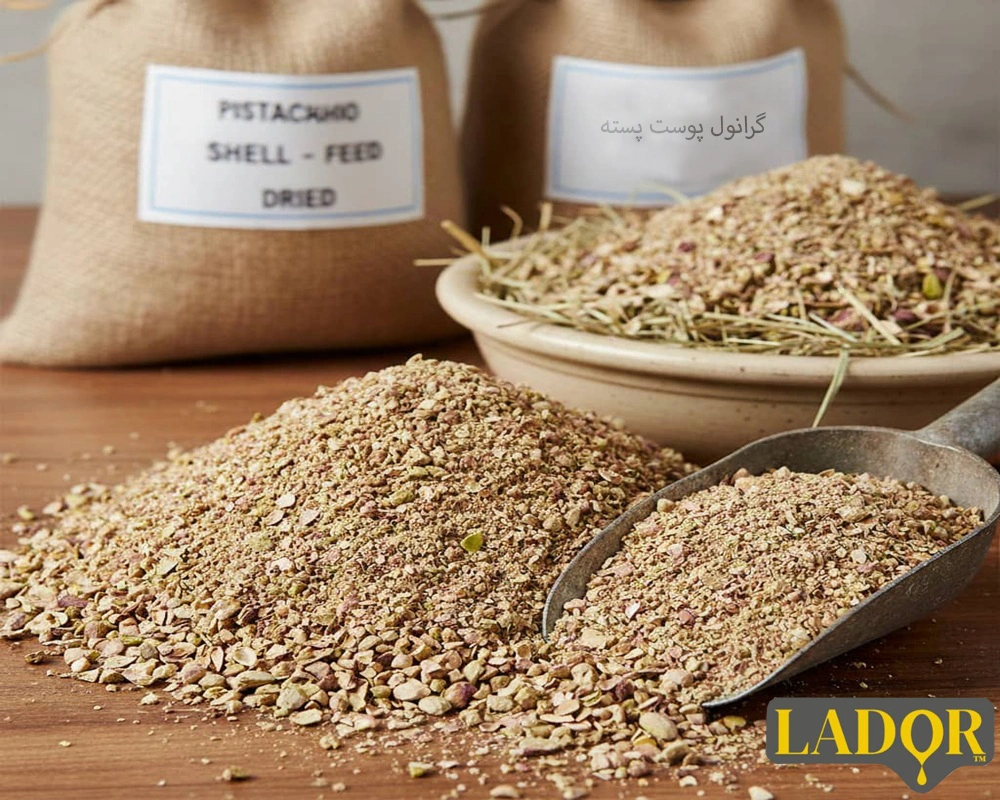
Pistachio shell granules or pistachio powder for livestock and poultry are excellent substitutes for straw, alfalfa, and grain in the animal husbandry industry, significantly reducing farming costs. Contrary to popular belief, pistachio shells contain approximately 10% to 12% protein, along with some fat and fiber, making them excellent for livestock growth (especially fattening cattle and sheep).
As one of the world’s primary hubs for pistachio production, Iran faces a massive volume of waste from this product annually. In the past, the green pistachio hull was considered a worthless waste product, the accumulation of which even caused environmental pollution. However, today, with advancements in nutritional science, these wastes have been transformed into a valuable product called “Pistachio shell Granules.” This feed resource not only relieves the burden on the environment but has also become one of the most popular options in the diets of light and heavy livestock as a cheap and nutritious alternative to expensive forages like alfalfa and straw.
Important Note: Sometimes in the livestock market, the “bony shell” (the hard white shell) is also used in ground form for industrial purposes (such as producing activated carbon or animal bedding); however, for livestock feed, it is primarily the soft pistachio shell that is intended.
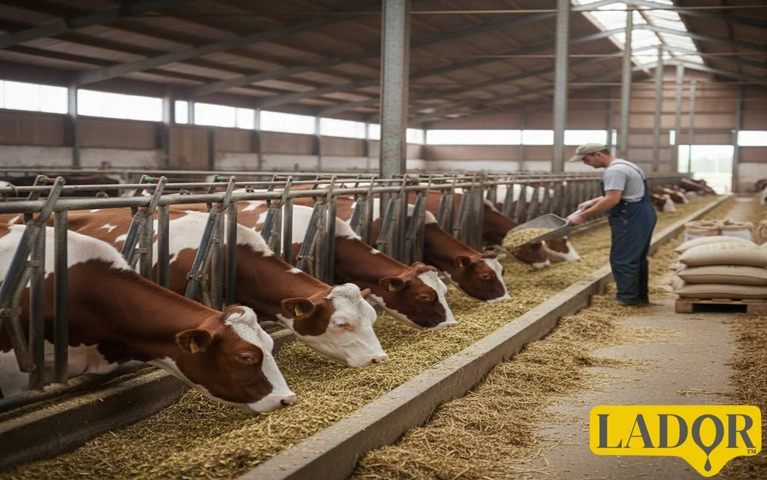
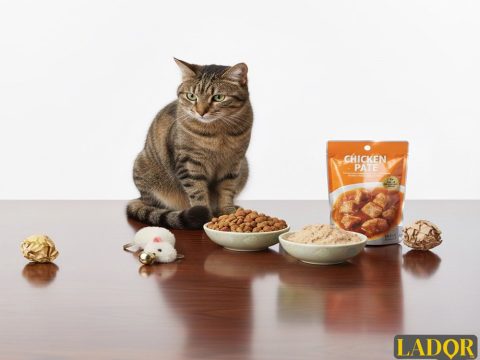
Pistachio shell granules or powder, contrary to the general perception that they are exclusive to livestock, are also widely used in poultry nutrition. In fact, due to its low price and suitable nutritional value, this product is considered an economic alternative for a portion of expensive feed ingredients in the diets of both groups. For poultry, the pistachio hull must be in the form of a completely fine powder or very small granules (usually using mill screen No. 1 or 2).
This powder serves as an inexpensive source of fiber and calcium for poultry, improves digestion, and possesses antioxidant properties (due to the presence of polyphenols in the green shell). Due to the presence of “tannin” (which can disrupt protein digestion in high amounts), the amount used in poultry rations must be limited and precise (usually between 2% to 6% of the ration).
In Poultry:
In Livestock:
Pistachio green shell granules possess a rich nutritional profile that places them far beyond a simple filler in the ration. On average, this product contains 10% to 12% crude protein, which makes it comparable to many high-quality forages. Additionally, the presence of approximately 5% to 7% fat and significant amounts of soluble carbohydrates provides the necessary energy for the animal’s vital activities. Furthermore, these granules are rich in minerals such as potassium, magnesium, and calcium, and due to their phenolic compounds, they have high antioxidant properties that help strengthen the animal’s immune system.
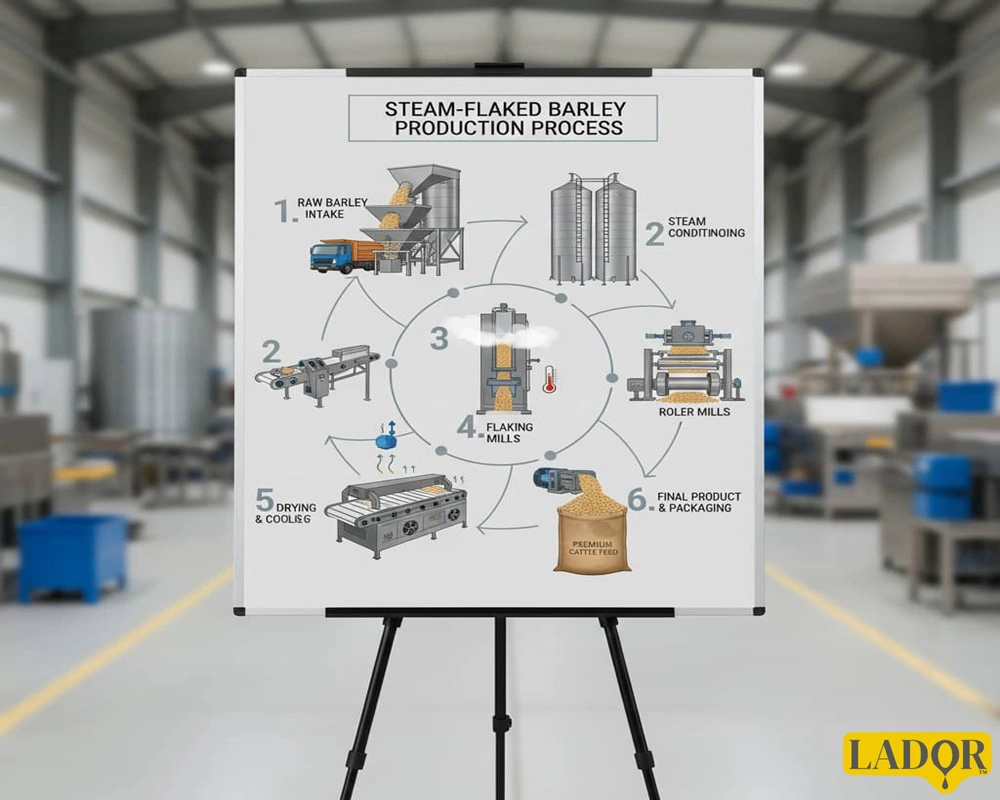
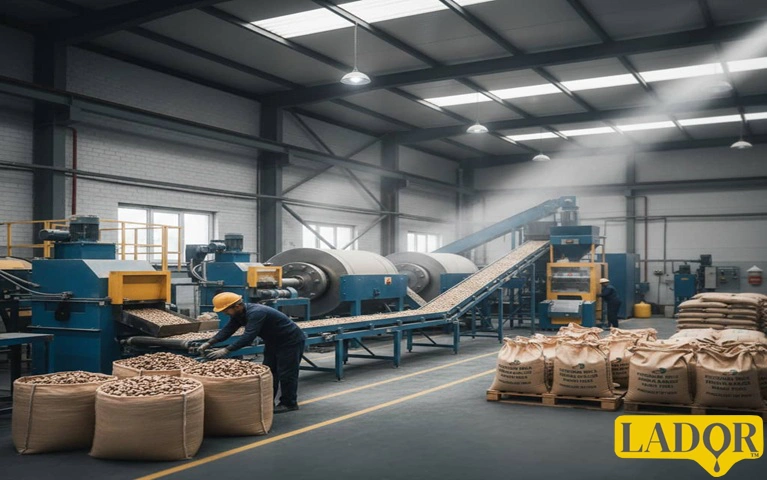
To transform wet waste shells into high-quality granules, a specific process is followed to prevent spoilage and ensure storage capability:
1. Collection and Separation At the end of the harvest season, the soft green shells separated during the pistachio hulling stage are collected. At this stage, hard pieces (the bony shell) must be separated as much as possible.
2. Dehydration and Drying Wet pistachio shells have very high moisture content and mold quickly. Therefore, they are placed in industrial dryers or exposed to sunlight until the moisture content drops below 10%.
3. Grinding and Granulation After drying, the shells are converted into small pieces (granules) using hammer mills. The size of these granules must be calibrated so they are neither too powdery (which causes respiratory issues for the livestock) nor too coarse (which makes digestion difficult).
4. Packaging The final product is usually packed in laminated bags to prevent the re-absorption of moisture.
Despite the numerous benefits, one should not overindulge in its use. Pistachio shells contain substances called “tannins.” Excessive consumption of tannins can disrupt protein absorption in the animal’s body. Therefore, it is recommended that this product constitutes between 15% to 25% of the forage portion of the ration. Additionally, care must be taken to ensure the product is completely dry and free of mold, as fungi present in damp waste can cause severe livestock poisoning.
Ala oil Sepahan Factory, under the brand name Ladorfat, is a pioneer in the production of powders, oils, and raw materials for the preparation of livestock and poultry feed. The Ladorfat group operates as a specialized hub in the feed input industry, acting as more than just a production unit; it serves as a strategic supplier and an enricher of the value chain for livestock and poultry feed.
Ladorfat presence in this market is extensive, ranging from the direct processing of certain products to the supply of raw materials and key additives for producing items such as olive meal, poultry meat meal, and barley malt pulp. By providing technical knowledge and base materials, the company plays a pivotal role in optimizing and supplying products such as fatty acids, raw poultry oil, hydrogenated soybean oil, as well as final formulations like feed for various birds (such as broilers) and poultry oil for partridge breeding, significantly enhancing quality and reducing ration costs.
Pistachio shell granules are a smart solution for cost management in modern livestock farming. With its suitable protein, sufficient energy, and antioxidant properties, this product is not only considered an economic substitute for expensive forage but also contributes to maintaining livestock health and improving the quality of animal products. Through correct processing and adherence to standard ration ratios, agricultural waste can be transformed into a valuable asset in the food production cycle. To inquire about prices and for more information, you can contact the experts at Ladorfat.